How to Choose Downlights for Industrial Spaces

Time:2026-11-17 Author:Liam
0%

How to choose downlights for industrial spaces begins with the work happening beneath them. A warehouse aisle, a machine bay, and a food-preparation area do not need the same beam, brightness, or protection. The U.S. Department of Energy’s Energy Saver guidance reports that LEDs use at least 75% less energy than incandescent lighting and can last up to 25 times longer. These figures are a useful efficiency benchmark, not a direct promise about every industrial downlight or existing fixture.

As lighting researcher Dr. Mariana Figueiro has noted, “Light is a powerful biological signal.” That matters on long shifts, where glare, uneven illumination, and harsh shadows can make visual tasks harder. Start by assessing mounting height, ceiling structure, dust, moisture, ambient temperature, and the detail workers must see. Then compare light distribution, lumen output, color rendering, dimming compatibility, and ingress protection. Check photometric files and model the actual space; a bright fixture can still leave dark patches between racks.

The IES Recommended Practice for Industrial Facilities, RP-7, offers a technical reference for planning industrial lighting. Use it alongside site measurements and qualified lighting advice. Small details matter. A driver that is difficult to replace can turn a modest failure into costly downtime. And specifications alone are not enough: real performance depends on installation, maintenance, and the surfaces in the room. Any guide to How to choose downlights for industrial spaces should make that uncertainty visible, rather than promise a perfect result from a product sheet.
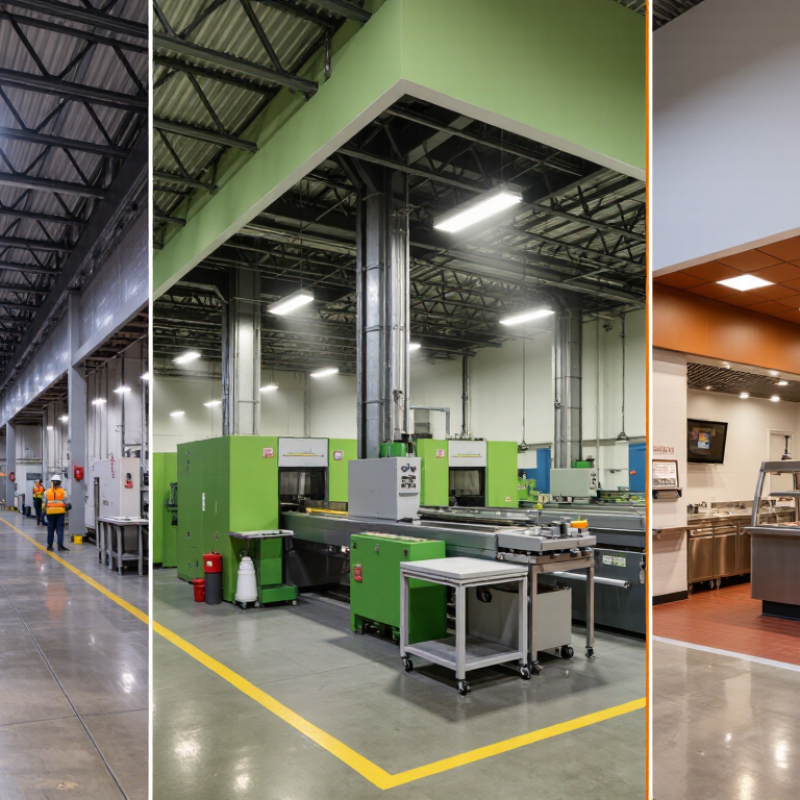
How to Choose Downlights for Industrial Spaces

Assess the Lighting Needs of the Industrial Space

Before choosing downlights, map how each zone is used during a typical shift. A packing bench needs clear visibility of labels and small defects; an aisle needs even light without harsh pools. Note ceiling height, racks, overhead pipes, and moving equipment. Dust, heat, vibration, and cleaning routines can affect fixture choice and maintenance access. Ask workers where shadows or glare slow tasks. Their feedback may reveal problems a floor plan misses.

Tips: Measure light at working height, not only on the floor. Check for dark spots beneath shelves and between machines. Keep a simple record of readings and operating conditions.

Match light levels to the work and applicable local guidance; inspection tasks usually need more careful visibility than storage areas. Consider color rendering where workers must distinguish wires, labels, or material defects. High ceilings may need narrower beams, while lower ceilings can make bright downlights uncomfortable. A layout that looks balanced on paper can still produce glare when equipment moves. Test a sample arrangement during real operations, then adjust spacing or aiming before installation. Include access for cleaning and replacement, since a hard-to-reach fitting may be neglected.

Choose Brightness, Beam Angle, and Color Temperature

How to Choose Downlights for Industrial Spaces

Brightness should match the work surface, not just the room’s floor area. EN 12464-1:2021 gives maintained illuminance values that vary by industrial task, with 300 lux used for many general production tasks and 500 lux for finer assembly work. Treat these as planning references, then check the actual task, ceiling height, and surface reflectance. A dark workbench can need more light than a pale one. Measure lux at the bench after installation; a bright-looking ceiling can still leave shadows on machinery.

Beam angle determines where that light lands. Narrow beams can create bright pools beneath high ceilings, while wider beams help distribute light across aisles and workstations. Too narrow, and workers may move between harsh hotspots and dim areas. Too wide, and light may spill onto walls instead of the task. The Illuminating Engineering Society’s RP-7-21 industrial lighting recommendations emphasize designing for the visual task and the environment. Still, a calculated layout is not a substitute for checking glare from polished metal or reflective floors.

Color temperature affects how the space feels and how clearly colors appear. Around 4000K often gives a neutral appearance; 5000K can look cooler, but it is not automatically better. Compare samples on site. Check that safety markings and wire colors remain easy to distinguish. I would avoid choosing by catalog photos alone. They rarely show the real ceiling.

Match Downlight Ratings to Site Conditions

Industrial downlights should be selected for the conditions they will actually face, not just their ceiling height. Check the IP rating against dust, washdown, and water exposure. For example, IP65 indicates dust protection and resistance to water jets, but it does not mean a fitting can be submerged. Where forklifts or tools may cause impacts, check the IK rating too. Also confirm the operating temperature range, especially near ovens, heaters, or poorly ventilated roof spaces. A high rating alone does not guarantee a suitable fitting.

Tips: Walk the installation area after a normal work shift. Note damp corners, fine dust, vibration, and direct impacts. Compare those observations with the product datasheet, including its mounting and cleaning instructions. If conditions vary, rate each zone separately.

Corrosive fumes, frequent cleaning, and vibration can shorten service life, even when a downlight appears robust. Check that the housing and seals suit the site’s cleaning chemicals and environment. Confirm that the driver can operate at the expected ambient temperature, and consider whether maintenance access is practical above machinery or storage racks. Beam angle and output matter as well: a narrow beam may leave dark patches between equipment. It is tempting to choose the toughest rating everywhere, but that can add cost without solving the real problem. Verify the specifications against site conditions and applicable local requirements before installation.

How to Choose Downlights for Industrial Spaces

Match the downlight’s IP rating to dust and water exposure at the installation site.

The first IP digit indicates protection against solid objects; the second indicates protection against water. For example, IP65 is dust-tight and protected against water jets. Treat these ratings as a selection guide, and check the fixture’s certified rating and site requirements before installation.

Compare Efficiency, Controls, and Maintenance Needs

In an industrial space, compare downlights by delivered lumens per watt, not wattage alone. Check the photometric file against rack heights, aisle widths, and work surfaces; a bright fitting can still leave dark patches between shelves. The IEA has estimated that lighting uses about 15% of global electricity, so modest efficiency gains matter across long operating hours. Heat matters. Review rated output at the actual ceiling temperature, not only laboratory conditions.

Controls can change the energy case. The U.S. Department of Energy’s 2017 report, Energy Savings from Networked Lighting Control Systems, found average lighting-energy savings of 47% across evaluated projects. That figure is not a guarantee for every warehouse. Savings depend on schedules, sensor placement, daylight, and whether workers override settings. Use occupancy sensors in intermittently used zones, and test dimming near skylights. A poorly aimed sensor may switch off lights over an occupied packing bench.

Maintenance deserves equal weight. Compare driver access, lens cleaning requirements, replacement availability, and the labor needed to reach each fitting. Dust on a lens is easy to overlook; it quietly reduces useful light. Ask for lumen-maintenance data and a written warranty, then check whether the stated life matches your switching pattern and ambient temperature. I would pilot a small area before ordering at scale. The pilot may expose glare or control delays that a spreadsheet misses. That is inconvenient, but cheaper than correcting an entire high-bay installation.

Plan Installation and Check Safety Requirements

Before choosing downlights for an industrial space, map the work areas, ceiling height, and existing equipment. A narrow beam may leave dark patches between machines, while a wide beam can create glare on polished surfaces. Mark likely fixture positions on a simple floor plan. Then compare the layout with the required task lighting and the manufacturer’s photometric data. Small details matter. A cable tray or overhead duct can block light.

Check the space’s dust, moisture, heat, and cleaning conditions before selecting an enclosure rating. Areas with combustible dust or flammable vapors may require specially certified equipment; ordinary industrial downlights are not a substitute. Confirm the site classification with a qualified professional. Also check operating temperature, dimming compatibility, emergency-lighting needs, and access for future maintenance. Ladders and production stoppages are not minor costs.

Plan installation around safe isolation of electrical circuits and the facility’s approved procedures. A qualified electrician should verify wiring, mounting support, and local requirements before work begins. Leave room to remove each fixture without dismantling nearby services. On one layout, the first spacing plan looked tidy on paper but cast shadows across inspection benches. That is worth checking with a mock-up or lighting calculation before installation. A little revision now can prevent uneven light and awkward rework later.

FAQS

How bright should industrial downlights be?

Match brightness to the work surface and task. General production often uses 300 lux; fine assembly may need 500 lux. Measure at the bench after installation.

Does room size determine the required brightness?

Not by itself. A dark workbench may need more light than a pale surface. Ceiling height and surface reflectance matter too.

How do I choose a beam angle?

Narrow beams can create bright pools under high ceilings. Wider beams spread light across aisles and workstations. Check for dark gaps between machines.

Is a wider beam always better?

No. It may send light onto walls instead of the work area. Reflective floors can also cause glare. Test the layout on site.

Which color temperature should I choose?

Around 4000K often looks neutral; 5000K appears cooler. Compare samples under the actual ceiling. Catalog photos can mislead.

How can I check whether colors remain clear?

Look at safety markings and wire colors under the installed lights. Small differences matter. I would not assume the sample tells the whole story.

What ratings matter in dusty or wet areas?

Check the IP rating against dust and water exposure. IP65 resists water jets, but it does not mean the light can be submerged.

What should I check in harsh industrial zones?

Check IK impact resistance, temperature range, seals, and housing materials. Note vibration, cleaning chemicals, and damp corners after a normal shift.

Should every area use the toughest-rated downlight?

Not necessarily. Rate each zone separately and match the fitting to real conditions. Extra protection can add cost without fixing the actual problem.

Conclusion

How to choose downlights for industrial spaces begins with understanding how each area is used, the height of the ceiling, and the tasks workers need to perform. These factors help determine suitable brightness, beam angle, and color temperature. Higher-output lighting may be needed for detailed work, while a wider beam can provide more even coverage in open areas. The light’s color should also support visibility and comfort throughout the working day.

Consider site conditions such as dust, moisture, heat, and vibration when selecting downlight ratings. Compare energy efficiency, dimming or other control options, and the effort required for cleaning and maintenance. Before installation, plan fixture placement to reduce shadows and glare, check that the electrical setup and mounting method suit the site, and follow applicable safety requirements. A careful assessment helps create reliable, practical lighting that supports both productivity and long-term operation.

Liam

Liam

Liam is a dedicated marketing professional with a profound expertise in the industry, where he excels at highlighting the unique advantages of our core products. With a keen understanding of market trends and consumer needs, Liam frequently updates our company’s professional blog, providing......