Choosing the right downlights can be challenging. It's crucial to understand "What certifications should high-quality downlights have." According to lighting expert, John Smith, "Certifications are essential for ensuring safety and quality in lighting products." His insight underscores the importance of certified downlights in any installation.
High-quality downlights must meet specific standards. Certifications such as Energy Star, UL, and CE indicate reliability and performance. These labels ensure the products have undergone stringent testing. Consumers often overlook these details, leading to poor choices. Paying attention to certifications can prevent costly mistakes.
Additionally, the market is filled with options that lack transparency. Understanding what specific certifications signify is vital. Not all downlights are created equal, and some may not be adequately tested. Prioritizing certified products will ensure safety and efficiency in lighting solutions.
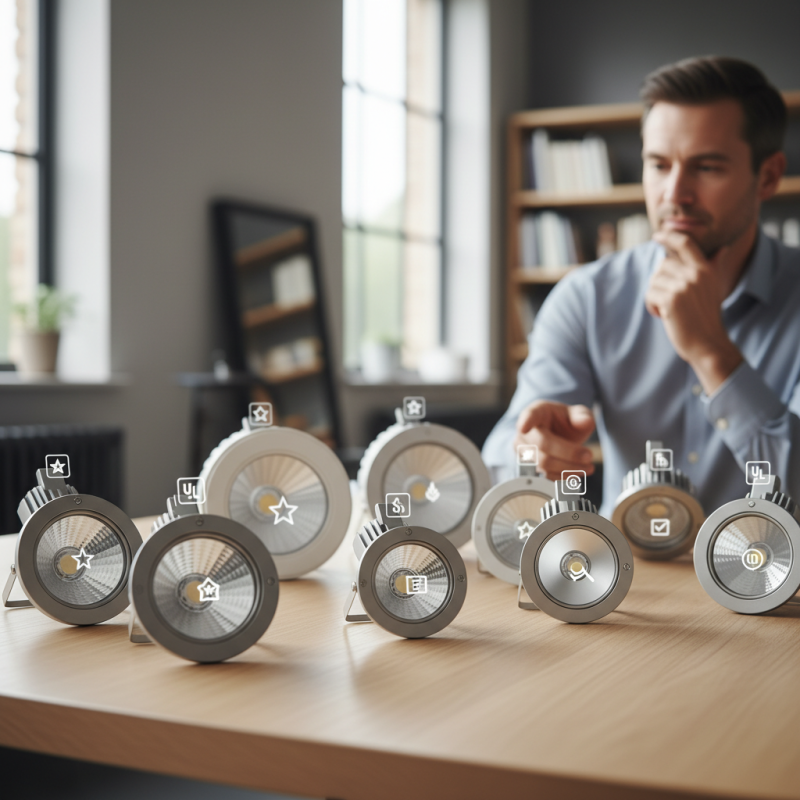
When choosing high-quality downlights, understanding certifications is essential. Various certifications indicate the safety, performance, and energy efficiency of the products. For instance, the Energy Star certification signifies that the product is energy-efficient, using at least 20% less energy than standard downlights. This can lead to lower electricity bills in the long run.
In the realm of safety, the Underwriters Laboratories (UL) certification is crucial. UL evaluates the risk of fire and electric shock. Products with this certification have passed rigorous testing, ensuring they meet safety standards. According to industry reports, incidents related to faulty lighting fixtures significantly declined after stricter certification standards were implemented. This highlights the importance of reliable certifications in reducing risks.
Tips: Always check for certifications before purchase. Look for Energy Star and UL marks. These can save energy and ensure safety.
Performance is another consideration. The Lighting Facts label offers transparency on lumen output, wattage, and life expectancy. Products with high efficacy scores provide more light for less energy. It is important to note that not all downlights meet optimal performance standards. Underperformed lights may result in higher costs over time.
Tips: Familiarize yourself with the Lighting Facts label. It can guide your choice effectively.
When selecting downlights, it’s important to consider key international standards for certification. These standards ensure safety, performance, and energy efficiency. Look for certifications like UL, CE, and ENERGY STAR. Each of these marks indicates that the products have undergone rigorous testing. This testing guarantees compliance with safety and environmental regulations, making them reliable choices.
Different regions may have specific standards as well. For instance, in Europe, compliance with the EN standard is crucial. This ensures that the product meets strict safety and performance guidelines. These labels provide assurance to consumers regarding the quality of the downlights. However, not all products may display these certifications prominently. It requires careful scrutiny to ensure the desired safety and performance levels.
Given the complexity of standards, some manufacturers may claim compliance without adequate proof. This can lead to misleading information. It's essential for buyers to research thoroughly and ensure that the certifications are legitimate. Relying solely on labels can be risky. Checking for third-party testing and reviews might offer additional reassurance about the products in question.
When selecting high-quality downlights, energy efficiency is a crucial factor. Look for energy efficiency labels like Energy Star and the U.S. Department of Energy’s Lighting Facts label. These labels indicate that the product meets stringent energy performance standards. A 2020 study by the American Council for an Energy-Efficient Economy found that products with Energy Star ratings can save consumers up to 30% on their energy bills.
Another notable aspect is lumens per watt (lm/W). This metric shows how much light is produced for each watt of electricity consumed. High-quality downlights typically offer 80-100 lm/W. However, some products fall short of this range. It’s vital to check these specifications to avoid inefficient lighting solutions that can lead to increased energy use.
While certifications can guide your choices, not all products display them consistently. Transparency in labeling remains an issue. Many consumers may overlook the importance of reading labels thoroughly. Neglecting to consider energy efficiency can result in wasted resources over time, both financially and environmentally. Thus, being diligent in checking these certifications is essential for making informed lighting decisions.
When choosing high-quality downlights, safety certifications are crucial. Compliance with recognized safety standards ensures the product's reliability. The Underwriters Laboratories (UL) certification is a well-respected marker in the lighting industry. According to market research, around 72% of consumers prioritize products with UL certification when making lighting decisions. This reflects a broader trend towards wanting assurance in safety and quality.
Another valuable certification is the International Electrotechnical Commission (IEC) standard. The IEC ensures that the electrical safety and performance of downlights meet global technical requirements. This certification can help prevent hazards like electrical fires or short circuits. A report by the National Fire Protection Association shows that improper lighting installations lead to nearly 12% of residential fire incidents.
Not all downlights come with these certifications. It's essential to conduct thorough research. Consumers should scrutinize product specifications and ask manufacturers directly about safety certifications. Many products marketed as 'high quality' may lack these crucial safety assurances. Ignoring safety certifications could lead to serious consequences down the line.
When considering high-quality downlights, environmental impact certifications are crucial. These certifications ensure that lighting products meet specific sustainability standards. The energy efficiency of downlights can significantly reduce carbon footprints. According to the U.S. Department of Energy, LED downlights use at least 75% less energy than traditional incandescent bulbs. This is a compelling reason for manufacturers to pursue credible certifications.
Certifications like ENERGY STAR® focus on product efficiency and environmental responsibility. Products with this certification undergo rigorous testing. They are proven to deliver significant energy savings. Additionally, the International Dark-Sky Association certifies lights that minimize light pollution. Using certified products can enhance both environmental and human health. Quality downlights should aim to be both efficient and eco-friendly.
However, not all certifications are equal. Some may lack stringent testing processes. This is where consumers need to be vigilant. Research from the Lighting Research Center indicates that 40% of consumers are unaware of these certifications. Education about environmental impacts is essential. Without awareness, consumers may overlook responsible choices. The industry must improve transparency to guide informed decisions.
| Certification Name | Description | Standards Held | Environmental Impact |
|---|---|---|---|
| ENERGY STAR | Indicates energy-efficient lighting products that save energy and reduce greenhouse gas emissions. | US EPA guidelines | Reduces energy consumption and promotes sustainability. |
| LEED | Leadership in Energy and Environmental Design, a certification program recognizing best-in-class building strategies and practices. | US Green Building Council standards | Encourages environmentally responsible building practices. |
| RoHS | Restriction of Hazardous Substances Directive limits harmful materials found in electrical and electronic products. | EU RoHS Directive | Protects human health and the environment by restricting hazardous substances. |
| TLC Certified | Certification for low energy and environmentally friendly lighting systems. | Lighting Technology Certification standards | Promotes energy efficiency in lighting design. |
| California Title 24 | California's building energy efficiency standards aimed at improving energy efficiency in residential and nonresidential buildings. | California Building Standards Commission | Encourages the use of energy-efficient lighting solutions. |
: Look for UL, CE, and ENERGY STAR certifications for safety and performance.
They ensure that downlights are reliable and meet safety standards, reducing risks.
It shows that the product has undergone rigorous testing for safety and quality.
No, many products may lack necessary certifications. Always check specifications.
Research thoroughly, and check for third-party testing and reviews for legitimacy.
They can lead to hazards like electrical fires, affecting safety in homes.
No, it can be risky; always ensure certifications are valid and legitimate.
Consumers should ask manufacturers about certifications and scrutinize product details.
Yes, regions like Europe have specific standards, such as the EN standard for compliance.
It ensures electrical safety and performance meet global technical requirements.
When considering high-quality downlights, it's essential to understand what certifications these products should have. Certifications play a crucial role in ensuring that downlights meet safety, performance, and environmental standards. Key international standards provide guidelines for energy efficiency, safety performance, and environmental impact, which are vital for both consumer satisfaction and regulatory compliance.
Energy efficiency labels are particularly important, as they indicate the product’s performance in terms of energy consumption, helping consumers make informed decisions. Additionally, safety certifications ensure that the downlights adhere to strict electrical standards, reducing risks in residential and commercial settings. Lastly, certifications related to environmental impact highlight the sustainability of the downlighting products, appealing to eco-conscious consumers. Overall, knowing what certifications high-quality downlights should have is integral to selecting safe, efficient, and environmentally-friendly lighting solutions.

Diva Lights