As we move toward 2026, understanding how to choose downlights for residential use becomes increasingly critical. Recent industry reports indicate that the global downlight market is projected to grow significantly, reaching $10 billion by 2026. This growth emphasizes the importance of selecting the right downlights for your home.
When considering downlights, several factors must be evaluated. The lumen output, energy efficiency, and design are essential. According to the U.S. Department of Energy, LED downlights use at least 75% less energy than incandescent lighting. Homeowners often face challenges such as ensuring adequate light coverage and matching their home’s aesthetic. These challenges reflect the need for careful selection.
Moreover, personal preferences play a vital role in the decision-making process. The choices available today can be overwhelming. It's essential to weigh the pros and cons of each option carefully. Investing time in understanding these factors will lead to better outcomes in creating a warm, inviting atmosphere in your home. Remember, lighting sets the mood, and getting it right is crucial.
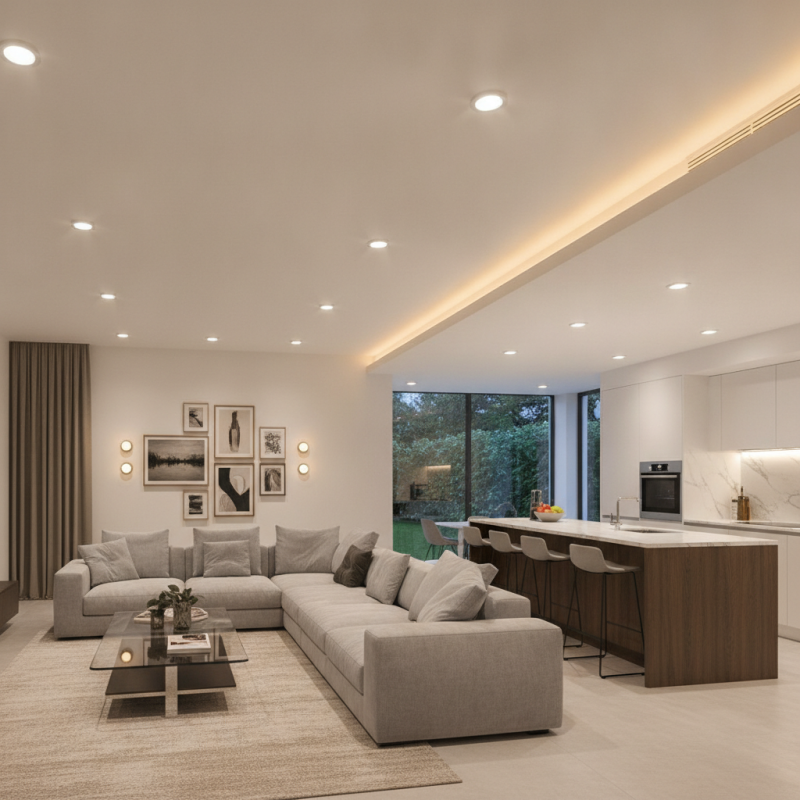
Choosing the right downlights for your home involves several critical factors. First, consider the brightness level. Brightness is measured in lumens. A report from the American Lighting Association indicates that most living spaces require at least 800 lumens per room for comfortable illumination. Overly bright lights can cause glare, making spaces uncomfortable. Conversely, dim downlights can lead to poor visibility, particularly in kitchens or work areas.
Another important aspect is color temperature, measured in K}elvins (K). Warm white (around 2700K) is ideal for cozy spaces like bedrooms or living rooms. Cool white (around 4000K) suits work areas, providing a clearer view for tasks. A study highlighted that 65% of respondents prefer warm lighting in living areas. However, some may find this too dim, necessitating different lighting solutions within the same home.
Don't overlook the design and placement of downlights. Subpar designs can detract from your decor. Consider the height of your ceilings; higher ceilings may need more powerful downlights to distribute light evenly. A miscalculation can lead to dark corners and disrupt the room's ambiance. Assess your layout and furniture placement when choosing styles and configurations, ensuring you create a flow that complements your space.
Downlights are essential for creating an inviting atmosphere in any home. When selecting downlights, consider three main types: LED, halogen, and compact fluorescent. Each type has its benefits and drawbacks, impacting energy consumption, brightness, and lifespan.
LED downlights are energy-efficient and long-lasting. They are available in various color temperatures, making it easy to achieve the desired ambiance. However, some low-quality LED options may flicker or not dim properly. This can affect mood and comfort.
Halogen downlights provide bright, warm lighting. They can be less efficient than LEDs but deliver excellent color rendering. One downside is that they generate heat. This might lead to higher energy bills and safety concerns if not installed correctly.
Tips: Always check the lumens output to ensure proper brightness. If you're uncertain about installation, consult a professional. It's essential to consider dimmable options for versatile lighting. Take your time to experiment with different types to find what fits best for your space.
When selecting downlights for your home, brightness is crucial. A suitable brightness level enhances functionality and atmosphere. Most rooms require different brightness. For a living room, warm light at 3000K to 4000K is ideal. In contrast, kitchens often benefit from brighter, cooler light at 4000K to 5000K. Consider how light impacts mood and activity in each space.
Color temperature greatly influences the environment. It varies in shades from warm yellow to cool blue. Warm light creates a cozy ambiance, perfect for relaxation. Cooler tones, however, enhance visibility and focus, ideal for task-oriented areas. It's essential to evaluate these needs before making a decision. Think about what each room needs.
Beam angle is another key feature. A narrow beam creates focused light, suitable for art. Wider beams, however, illuminate larger areas, ideal for living spaces. Test a few options before finalizing your choice for the best effect.
Tips: Always check for dimmable options. They provide flexibility to adjust light intensity. Make sure to use LED fixtures for energy efficiency. Lastly, consider your home’s overall lighting design to ensure cohesiveness.
Choosing the right downlights for your home involves understanding proper installation techniques. According to the American Lighting Association, 45% of lighting problems arise from improper mounting and wiring. Ensuring secure installation can prevent issues like flickering lights or uneven illumination.
When installing downlights, consider the placement carefully. Aim to create layers of light, enhancing the room's aesthetics and functionality. Keep an eye on the ceiling height. For higher ceilings, select downlights that offer more power and adjustability. A spacing of 4 to 6 feet is often recommended between fixtures for even light distribution.
Tips: Before beginning installation, ensure the power is turned off at the breaker. For wiring, always follow local electrical codes. Utilize a wire connector or electrical tape to secure connections. Improper wiring can lead to short circuits, resulting in costly repairs. It's essential to double-check all connections and install fixtures securely to avoid any malfunctions down the line.
| Feature | Description | Recommended Specifications |
|---|---|---|
| Brightness | Measured in lumens; higher values provide more light. | 800 - 1500 lumens for general lighting |
| Color Temperature | Affects the look and feel of the space; measured in Kelvin (K). | 2700K - 3000K for warm white; 4000K for neutral white |
| Energy Efficiency | Rated by lumens per watt (lm/W); higher values indicate better efficiency. | 80 lm/W or higher |
| Dimmability | Allows adjusting brightness; compatible with dimmer switches. | Choose models specifically marked as dimmable |
| Installation Type | Can be recessed, surface-mounted, or pendant. | Recessed for a sleek look; surface-mounted for easy access |
| Lifespan | Indicator of how long the downlight will last. | 25,000 - 50,000 hours for LED downlights |
| Beam Angle | Determines how wide the light spreads; measured in degrees. | 30° for narrow beams; 60° or more for broader coverage |
Choosing eco-friendly downlights for your home is crucial for energy efficiency. According to the U.S. Department of Energy, LED lighting uses 75% less energy than traditional incandescent bulbs. This transition not only reduces your carbon footprint but also significantly lowers electricity bills. The average lifespan of LED bulbs is around 25,000 hours, surpassing other options.
However, there are challenges. Many consumers still opt for less efficient lighting due to initial costs. Eco-friendly downlights can be higher in price, making hesitation understandable. It's important to weigh these upfront costs against long-term savings. Conducting a proper energy audit can help identify the best choices for your specific space. Research suggests that even a small adjustment in lighting choices can lead to a 20% reduction in energy use.
Additionally, consider the materials used in downlights. Some eco-friendly options incorporate recycled materials, contributing further to sustainability. Yet, not all so-called “green” products meet strict environmental standards. Assessing certifications, such as ENERGY STAR ratings, can bring clarity. Transparency in manufacturing can guide your decisions. Adopting these practices enhances both your home's efficiency and your commitment to the environment.
: Most living spaces require at least 800 lumens for comfortable illumination.
Color temperature, measured in Kelvins, influences ambiance. Warm light is cozy, while cool light enhances visibility.
Kitchens benefit from brighter, cooler light in the range of 4000K to 5000K for better visibility during tasks.
Beam angle affects how light is distributed. Narrow beams focus light, while wider beams cover larger areas.
Dimmable options allow you to adjust light intensity, creating a flexible atmosphere for different activities.
Ensure secure mounting and proper wiring to avoid issues like flickering lights or uneven illumination.
Higher ceilings may require more powerful downlights to distribute light evenly and prevent dark corners.
A spacing of 4 to 6 feet is suggested for even light distribution, depending on room size.
Always turn off the power at the breaker and check wiring connections to prevent short circuits.
Improper mounting and wiring are frequent issues, often leading to flickering lights or uneven light distribution.
When considering how to choose downlights for residential use in 2026, several key factors come into play. Start by evaluating the types of downlights available, such as LED and halogen, to determine which aligns best with your lighting needs. It's crucial to assess features like brightness, color temperature, and beam angle to create the desired ambiance and functionality in each space.
Proper installation is also vital; ensuring downlights are mounted and wired correctly can enhance both safety and performance. Finally, consider energy efficiency by opting for eco-friendly lighting solutions that minimize energy consumption while providing effective illumination. By keeping these aspects in mind, you can make informed decisions that enhance your home’s lighting while aligning with contemporary standards.
Diva Lights