In recent years, energy efficiency has become a global focus. Downlights, often used for their aesthetic appeal, can significantly impact energy consumption. According to the U.S. Department of Energy, residential lighting accounts for 15% of the average electricity bill. This highlights the importance of exploring how to reduce energy consumption with downlights.
Expert Greg Johnson, a leader in energy efficiency research, states, "Choosing the right downlighting can cut energy use by up to 50%." Selecting LED downlights over traditional bulbs is one of the most effective strategies. LED lights last longer and use less wattage. This approach not only lowers energy bills but also reduces carbon footprints.
However, not all downlights are created equal. It's crucial to assess the brightness and color temperature to match specific needs. A hasty choice may lead to inadequate lighting or higher energy use. Evaluating options carefully can be challenging but essential for maximizing energy savings.
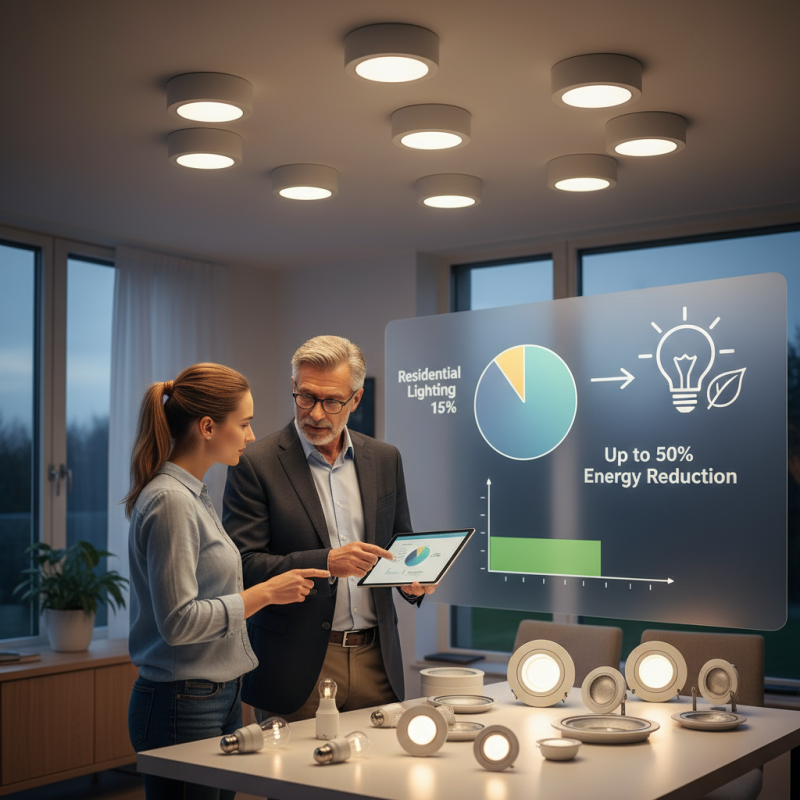
Downlights are a popular lighting choice due to their sleek design and versatility. Understanding their energy consumption is crucial for effective reduction strategies. Research shows that downlights can consume between 30 to 70 watts each, depending on the bulb type. In a standard home with multiple downlights, this usage quickly adds up.
Energy-efficient options, like LED downlights, can reduce consumption by up to 75%. They typically use 10 to 15 watts per fixture. This significant reduction demonstrates the potential for energy savings. Installing dimmable features can further lower energy usage. Adjusting brightness to match the activity can help lessen overall consumption without sacrificing illumination.
However, many homeowners overlook the importance of proper placement and selection of downlights. Poorly positioned fixtures can lead to wasted energy and inadequate lighting. Regularly reviewing your lighting requirements is necessary. Analyze whether all fixtures are still needed, and consider using smart technology for more control. Addressing these elements can lead to more efficient energy consumption and a more sustainable home.
: Downlights are popular lighting fixtures known for their sleek design and versatility in homes.
Downlights can use between 30 to 70 watts each, depending on the bulb type.
LED downlights can reduce energy consumption by up to 75%, using only 10 to 15 watts per fixture.
Dimmable features allow users to adjust brightness, leading to lower energy consumption without losing light quality.
Poorly positioned downlights waste energy and result in inadequate lighting. Proper placement is crucial for efficiency.
Smart technologies enable better control over lighting, adjusting based on occupancy and natural light for greater efficiency.
Motion sensors turn lights on when entering a room and off when it's empty, minimizing wasted energy.
Dust and debris can reduce brightness and energy use. Regular cleaning enhances both performance and efficiency.
It's advisable to evaluate and upgrade lighting systems every few years to benefit from newer technologies and save energy.
Yes, professionals can provide tailored solutions, ensuring optimal performance and efficiency for your downlights.
In exploring "How to reduce energy consumption with downlights," it is essential to first understand the characteristics and energy usage of downlights. By opting for energy-efficient downlight options, one can significantly cut energy expenses. It's crucial to consider the placement of downlights as strategic positioning can minimize unnecessary energy use while maximizing illumination in desired areas.
Additionally, embracing smart technology can enhance energy savings by allowing users to control lighting efficiently. Regular maintenance and timely upgrades ensure that downlights operate at optimal performance, further contributing to reduced energy consumption. By following these guidelines, individuals can effectively lower their energy usage without compromising on lighting quality.

 Diva Lights