In 2026, downlights have become a popular lighting choice in many homes and businesses. However, common downlight issues can arise, creating frustration for users. Understanding how to troubleshoot common downlight problems is essential for maintaining a well-lit environment. This knowledge not only helps in saving time but also reduces the need for professional help.
Downlights may flicker, emit strange noises, or fail entirely. Each problem can stem from various causes, ranging from installation errors to electrical issues. For example, improper dimmer switches might lead to flickering lights. Identifying these issues early can prevent larger problems down the line.
Equipped with the right tools and information, users can tackle these issues with confidence. Regular maintenance and attention to detail are vital. A systematic approach to troubleshooting ensures that the downlights continue to function optimally. Embracing this knowledge empowers homeowners and small business owners alike to enhance their spaces effectively.
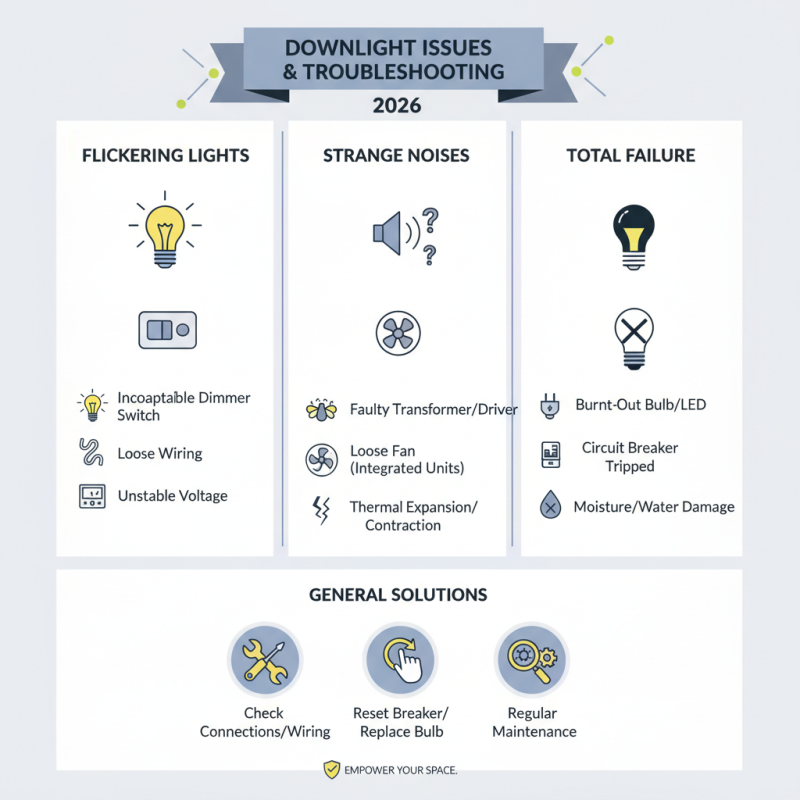
Identifying Common Downlight Issues in 2026
Identifying common downlight issues in 2026 can help you maintain a functional lighting system. Many users face flickering lights or inconsistent brightness. These issues often stem from poor connections or outdated fixtures. Checking the wiring and ensuring secure installations can make a significant difference.
Another prevalent issue is overheating. If downlights feel excessively warm, it could be a sign of improper ventilation. Consider upgrading to LED bulbs for better heat management. LED technology uses less energy and emits less heat, improving safety and efficiency in your home.
Tips: Regularly inspect your downlights for dust buildup. Dust can block light and strain the system. Consider cleaning more frequently, especially in high-usage areas. If you're still facing issues, consult a professional to explore advanced electrical concerns that may require specific tools or expertise.
Understanding the Types of Downlights and Their Functions
When it comes to downlights, understanding their types and functions is crucial. Downlights come in several forms, with adjustable, fixed, and recessed being the most popular types. Adjustable downlights offer flexibility, directing light where needed. Fixed options deliver consistent illumination, while recessed downlights create a clean look by being embedded into ceilings. According to industry reports, these three types represent approximately 70% of the downlight market in 2026.
Each type serves a specific purpose, impacting ambiance and energy efficiency. For instance, LED downlights are renowned for their longevity and low energy consumption, with some models lasting up to 50,000 hours. However, not all LED options are created equal. The efficiency can significantly vary based on the design and heat management technology. A poor choice can lead to overheating and reduced lifespan, prompting users to reconsider their selection process.
Moreover, compatibility with dimmers is essential for achieving the desired lighting effect. Many consumers overlook this aspect, leading to flickering or buzzing sounds. A report indicated that around 25% of homeowners experience such issues due to mismatched components. This highlights the importance of research and professional advice when selecting downlights, ensuring a match that meets both functionality and aesthetic preferences.
Step-by-Step Troubleshooting for Flickering Downlights
Flickering downlights can be frustrating, especially when they disrupt the atmosphere of your space. This issue often stems from several common causes. Begin by checking the bulb installation. A loose bulb can lead to flickering lights. Ensure the bulb is securely fitted in its socket. If tightening doesn’t help, consider replacing the bulb. Sometimes, old bulbs can cause persistent flickering.
Next, examine the fixture itself. Damaged or outdated fixtures may not handle modern bulbs well, leading to issues. Inspect wiring connections too. Loose wires can create inconsistencies in power supply, resulting in flickering. Sometimes, the dimmer switch may be at fault. If your lights flicker only when dimmed, verify if the dimmer is compatible with your bulbs.
Don’t overlook the power supply. Electrical surges can cause flickering as well. If the problem persists, consulting an electrician might be necessary. They can confirm if the wiring is code-compliant and safe. Troubleshooting ensures your downlights function smoothly, creating the perfect ambiance in your home. Remember, it’s normal to encounter these nuisances; the key is knowing how to address them.
Troubleshooting Common Downlight Issues in 2026
Resolving Problems with Downlight Dimming Issues
Dimming issues can be frustrating for downlight users. When lights flicker or fail to dim smoothly, it can disrupt the ambiance of any room. One common cause is compatibility between the dimmer switch and the downlight. Many older dimmers do not work well with modern LED lights. Before installation, check compatibility guidelines. A mismatched pairing might be the root of your dimming problems.
Another factor contributing to dimming issues could be poor wiring. Loose connections can lead to inconsistent power supply. Regularly inspect wiring and connections, especially in older homes. A quick visual check may reveal signs of wear or damage. Ensure all wires are securely connected and free of corrosion.
Heat buildup is also an issue to consider. Downlights that are not properly ventilated can overheat. This may affect the performance of both the fixture and the bulb. Providing adequate airflow around downlights can help mitigate this issue. In some cases, replacing the bulb with a cooler option can lead to better performance. Addressing these concerns can significantly improve your downlight experience.
Preventive Measures for Long-lasting Downlight Performance
When it comes to downlight performance, preventive measures can be crucial. Regular maintenance is often overlooked. Dust and debris can build up in fixtures, negatively affecting light output. A simple wipe every few months can make a difference. Keeping the area around downlights clean promotes efficient lighting.
Check for loose connections frequently. This may sound basic, but it is common for connections to come undone. Tightening these connections can prevent flickering and extend the life of your downlights. Make sure your electrical system is stable too. Voltage fluctuations can cause premature failure, often unnoticed until it’s too late.
Heat management is essential for longevity. Downlights can generate a lot of heat if not well ventilated. Assess your installation to ensure there’s enough airflow. Consider using LED bulbs, which produce less heat. However, even LEDs need attention. Overheating can still occur in tightly enclosed spaces. Taking these small actions can greatly enhance performance and reliability.
FAQS
: Flickering lights and inconsistent brightness are frequent problems. They often arise from poor connections or outdated fixtures.
Check the wiring and ensure connections are secure. This simple step can significantly improve your downlight performance.
Excessive warmth may indicate poor ventilation. Consider upgrading to LED bulbs, which generate less heat.
Regular cleaning is vital. Dust buildup can block light and strain the system. Clean fixtures every few months.
Inspect for loose connections and ensure your electrical system is stable. Voltage fluctuations can lead to problems.
Yes, even LED bulbs can overheat in tightly enclosed spaces. Proper airflow is essential for cooling.
Keep the area around downlights clean. A tidy space enhances light output and performance.
If issues persist, consult an expert. Advanced electrical concerns may require specific tools and knowledge.
Yes, preventive maintenance can greatly extend the life of your downlights. Regular checks make a significant difference.
Maintenance can be straightforward, but many overlook it. Small actions can lead to better performance and reliability.
Conclusion
In the realm of downlighting, understanding how to troubleshoot common downlight problems is essential for ensuring optimal performance and longevity. The article outlines the primary issues often encountered in 2026, emphasizing the importance of identifying these problems early. It categorizes downlights by their types and functions, providing a clear framework for users to understand their lighting systems better.
Moreover, the step-by-step troubleshooting for flickering downlights enhances the reader's ability to tackle specific issues effectively. It also addresses common dimming problems, offering practical solutions to enhance user experience. Finally, the article discusses preventive measures that can be adopted to maintain downlight performance, ensuring that these fixtures remain efficient and reliable over time. By following these guidelines, users can enjoy consistent lighting and prolong the lifespan of their downlights.

 Diva Lights